| CAS Number: | 1317-39-1 |
| MDL Number: | MFCD00010974 |
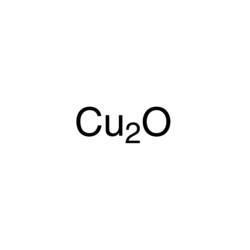
| Molecular Formula: | Cu2O |
| Molecular Weight: | 143.08 |
| Chemical Formula: | Cu2O |
| Color and Form: | red-brown pwdr. |
| Note: |
Physical Characteristics: melting point 1235°C, density 6.0
| SECTION 1: Product Identification | |
|---|---|
| Chemical Name: | Copper (I) oxide, min. 95% |
| Product Number: | 93-2944 |
| CAS Registry Number: | 1317-39-1 |
| Formula: | Cu2O |
| EINECS Number: | 215-270-7 |
| Chemical Family: | metal oxide |
| Synonym: | Cuprous oxide, Dicopper monoxide |
| SECTION 2: Composition and Information on Ingredients | ||||
|---|---|---|---|---|
| Ingredient | CAS Number | Percent | ACGIH (TWA) | OSHA (PEL) |
| Title Compound | 1317-39-1 | 100 | 0.2mg/m3 (as Cu) | 0.1mg/m3 (as Cu) |
| SECTION 3: Hazards Identification | |
|---|---|
| Emergency Overview: | Harmful if swallowed. May be irritating to the skin, eyes and respiratory tract. |
| Primary Routes of Exposure: | Ingestion, inhalation |
| Eye Contact: | May cause slight to mild irritation of the eyes |
| Skin Contact: | May cause slight to mild irritation of the skin. |
| Inhalation: | The material is a fine powder. May be irritating to the nose, mucous membranes and respiratory tract. |
| Ingestion: | Harmful if swallowed. Ingestion of copper compounds may lead to vomiting, exhaustion, anemia, convulsions and coma. |
| Acute Health Effects: | Harmful if swallowed. May be irritating to skin, eyes and respiratory tract. Inhalation may cause chills, muscle ache, nausea, fever and dry throat. |
| Chronic Health Effects: | The dust of copper compounds may cause metal fume fever, hemolysis of the red blood cells and injury to the liver, lungs, kidneys and pancreas. |
| NTP: | No |
| IARC: | No |
| OSHA: | No |
| SECTION 4: First Aid Measures | |
|---|---|
| Eye Exposure: | Immediately flush the eyes with copious amounts of water for at least 10-15 minutes. A victim may need assistance in keeping their eye lids open. Get immediate medical attention. |
| Skin Exposure: | Wash the affected area with water. Remove contaminated clothes if necessary. Seek medical assistance if irritation persists. |
| Inhalation: | Remove the victim to fresh air. Closely monitor the victim for signs of respiratory problems, such as difficulty in breathing, coughing, wheezing, or pain. In such cases seek immediate medical assistance. |
| Ingestion: | Seek medical attention immediately. Keep the victim calm. Give the victim water (only if conscious). Induce vomiting only if directed by medical personnel. |
| SECTION 5: Fire Fighting Measures | |
|---|---|
| Flash Point: | not applicable |
| Autoignition Temperature: | none |
| Explosion Limits: | none |
| Extinguishing Medium: | material is non-flammable |
| Special Fire Fighting Procedures: | No special fire-fighting procedures. The material is non-flammable. |
| Hazardous Combustion and Decomposion Products: | no hazardous decomposition products. |
| Unusual Fire or Explosion Hazards: | No unusual fire or explosion hazards. |
| SECTION 6: Accidental Release Measures | |
|---|---|
| Spill and Leak Procedures: | Small spills can be mixed with vermiculite or sodium carbonate and swept up. |
| SECTION 7: Handling and Storage | |
|---|---|
| Handling and Storage: | Store in cool, dry place in tightly closed containers. |
| SECTION 8: Exposure Controls and Personal Protection | |
|---|---|
| Eye Protection: | Always wear approved safety glasses when handling a chemical substance in the laboratory. |
| Skin Protection: | Wear protective clothing and gloves. |
| Ventilation: | Material may form a fine dust. If possible, handle the material in an efficient fume hood. |
| Respirator: | If ventilation is not available a respirator should be worn. The use of respirators requires a Respirator Protection Program to be in compliance with 29 CFR 1910.134. |
| Additional Protection: | No additional protection required. |
| SECTION 9: Physical and Chemical Properties | |
|---|---|
| Color and Form: | red-brown pwdr. |
| Molecular Weight: | 143.08 |
| Melting Point: | 1235°C |
| Boiling Point: | no data |
| Vapor Pressure: | not applicable |
| Specific Gravity: | 6 |
| Odor: | none |
| Solubility in Water: | Insoluble |
| SECTION 10: Stability and Reactivity | |
|---|---|
| Stability: | air and moisture stable solid |
| Hazardous Polymerization: | no hazardous polymerization |
| Conditions to Avoid: | Copper (I) oxide stored in air over a period of months may partially oxidize to black cupric oxide. |
| Incompatibility: | Oxidizing agents, active metals, nitric acid, acetylene and azides |
| Decomposition Products: | cupric oxide |
| SECTION 11: Toxicological Information | |
|---|---|
| RTECS Data: | Oral (rat); LD50: 470 mg/kg. Intraperitoneal (mouse); LD50: 380 mg/kg. Inhalation (rat); TCLo: 1 mg/m3/24H/14W-C. Inhalation (rat); TCLo: 11 ug/m3/24H. |
| Carcinogenic Effects: | No data available |
| Mutagenic Effects: | No data available |
| Tetratogenic Effects: | No data available |
| SECTION 12: Ecological Information | |
|---|---|
| Ecological Information: | No information available |
| SECTION 13: Disposal Considerations | |
|---|---|
| Disposal: | Dispose of according to local, state and federal regulations. |
| SECTION 14: Transportation | |
|---|---|
| Shipping Name (CFR): | Non-hazardous |
| Hazard Class (CFR): | NA |
| Additional Hazard Class (CFR): | NA |
| Packaging Group (CFR): | NA |
| UN ID Number (CFR): | NA |
| Shipping Name (IATA): | Non-hazardous |
| Hazard Class (IATA): | NA |
| Additional Hazard Class (IATA): | NA |
| Packaging Group (IATA): | NA |
| UN ID Number (IATA): | NA |
| SECTION 15: Regulatory Information | |
|---|---|
| TSCA: | Listed in the TSCA inventory |
| SARA (Title 313): | Title compound: See Category Code N100 for reporting. |
| Second Ingredient: | none |
| Third Ingredient: | none |
| SECTION 16: Other Information | |
|---|---|
| Disclaimer: | The information herein is believed to be accurate and reliable as of the date compiled. However, Strem Chemicals, Inc. makes no representation, warranty, or guarantee of any kind with respect to the information contained in this document or any use of the product based on this information. |
| Preparation Date: | 2/26/2001 |
| Revision Date: | 12/14/2011 |