Search for a full or partial Catalog Number, CAS Number or description
Your favorites Quick Order Form
Your cart is empty.
Home Catalog New Products Custom Synthesis & CGMP Product Resources About
Contact Strem

CAS Number: 7440-17-7
Product Catalog

37-3736
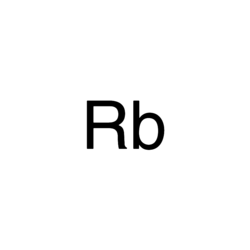
Rubidium Rubidium (99.9+%) (breakseal ampoule)
CAS Number: 7440-17-7
MDL Number: MFCD00134055
Molecular Formula: Rb
Molecular Weight: 85.47
Chemical Formula: Rb
Color and Form: under argon
Note:  

Stability: moisture sensitive

Safety: Hazardous, pyrophoric

Physical Characteristics: melting point 38.9°C, boiling point 688°C, density 1.532

Please log in or choose your country below to view prices.

Choose Your Country

SECTION 1: Product Identification
Chemical Name: Rubidium (99.9+%) (breakseal ampoule)
Product Number: 37-3736
CAS Registry Number: 7440-17-7
Formula: Rb
EINECS Number: 231-126-6
Chemical Family: metal or element
Synonym: Alkali metal
SECTION 2: Composition and Information on Ingredients
Ingredient CAS Number Percent ACGIH (TWA) OSHA (PEL)
Title Compound 7440-17-7 100 no data no data
SECTION 3: Hazards Identification
Emergency Overview: The metal rapidly forms caustic and highly corrosive alkali hydroxide with evolution of heat. Severe thermal and chemical burns will result at every point of human contact.
Primary Routes of Exposure: Contact with skin and eyes.
Eye Contact: Severe thermal burns, corrosion and ulceration of the eyes may occur on direct contact.
Skin Contact: Severe thermal burns, corrosion and ulceration of the skin may occur on direct contact.
Inhalation: Inhalation is not a likely mode of entry.
Ingestion: Ingestion will cause burns and perforations of the gastrointestinal tract.
Acute Health Effects: With moisture or human contact, metal rapidly forms caustic and highly corrosive alkali hydroxide with evolution of heat. Severe thermal and chemical burns will result.
Chronic Health Effects: No information available on long-term chronic effects.
NTP: No
IARC: No
OSHA: No
SECTION 4: First Aid Measures
Eye Exposure: Immediately flush the eyes with copious amounts of water for at least 10-15 minutes. A victim may need assistance in keeping their eye lids open. Get immediate medical attention.
Skin Exposure: Wash the affected area with water for at least 15 minutes. Remove contaminated clothes if necessary. Seek medical assistance if irritation persists.
Inhalation: (For dust or fume) Remove the victim to fresh air. Closely monitor the victim for signs of respiratory problems, such as difficulty in breathing or coughing. In such cases seek immediate medical assistance.
Ingestion: Seek medical attention immediately. Keep the victim calm. Give the victim water (only if conscious). Induce vomiting only if directed by medical personnel.
SECTION 5: Fire Fighting Measures
Flash Point: not applicable
Autoignition Temperature: no data
Explosion Limits: no data
Extinguishing Medium: Class D metal fire agent, dry salt or sand.
Special Fire Fighting Procedures: If this product is involved in a fire, fire fighters should be equipped with a NIOSH approved positive pressure self-contained breathing apparatus.
Hazardous Combustion and Decomposion Products: If involved in a fire, burning metal may produce severely corrosive fumes of rubidium oxide and hydroxide.
Unusual Fire or Explosion Hazards: Pyrophoric solid. May self-ignite. Evolves flammable hydrogen with water.
SECTION 6: Accidental Release Measures
Spill and Leak Procedures: In the case of a spill, the material should be covered with dry soda ash, limestone, or sand. Place in open container. Flammable hydrogen evolution may occur if wet.
SECTION 7: Handling and Storage
Handling and Storage: Handle and store in a tightly sealed container under an inert atmosphere of argon.
SECTION 8: Exposure Controls and Personal Protection
Eye Protection: Always wear approved chemical splash proof goggles.
Skin Protection: Wear protective clothing and gloves. Consult with glove manufacturer to determine the proper type of glove.
Ventilation: Handle in an efficient fume hood.
Respirator: If ventilation is not available a respirator should be worn. The use of respirators requires a Respirator Protection Program to be in compliance with 29 CFR 1910.134.
Additional Protection: Prepare for the possibility of fire.
SECTION 9: Physical and Chemical Properties
Color and Form: under argon
Molecular Weight: 85.47
Melting Point: 38.9°C
Boiling Point: 688°C
Vapor Pressure: no data
Specific Gravity: 1.532
Odor: none
Solubility in Water: reacts violently with water
SECTION 10: Stability and Reactivity
Stability: moisture sensitive, pyrophoric
Hazardous Polymerization: no hazardous polymerization
Conditions to Avoid: Contact with water or air.
Incompatibility: Water, alcohols, oxidizers, oxygen, carbon dioxide, halogens, halocarbons, acids.
Decomposition Products: Flammable hydrogen with moisture, caustic oxide with air or moisture.
SECTION 11: Toxicological Information
RTECS Data: Intraperitoneal (mouse); LD50: 1200 mg/kg
Carcinogenic Effects: No data available
Mutagenic Effects: No data available
Tetratogenic Effects: No data available
SECTION 12: Ecological Information
Ecological Information: No information available
SECTION 13: Disposal Considerations
Disposal: Dispose of according to local, state and federal regulations.
SECTION 14: Transportation
Shipping Name (CFR): Rubidium
Hazard Class (CFR): 4.3
Additional Hazard Class (CFR): NA
Packaging Group (CFR): I
UN ID Number (CFR): UN# 1423
Shipping Name (IATA): Rubidium
Hazard Class (IATA): 4.3
Additional Hazard Class (IATA): NA
Packaging Group (IATA): I
UN ID Number (IATA): UN# 1423
SECTION 15: Regulatory Information
TSCA: Listed in the TSCA inventory
SARA (Title 313): Title compound not listed
Second Ingredient: none
Third Ingredient: none
SECTION 16: Other Information
Disclaimer: The information herein is believed to be accurate and reliable as of the date compiled. However, Strem Chemicals, Inc. makes no representation, warranty, or guarantee of any kind with respect to the information contained in this document or any use of the product based on this information.
Preparation Date: 11/27/2000
Revision Date: 8/01/2011

back to search results